If you are thinking about trading city pace for shoreline space, Darien often lands on the shortlist for good reason. This Fairfield County town gives you a coastal setting, a manageable connection to New York City, and a residential feel that many buyers want when planning a long-term move. In this guide, you will get a clear look at what living in Darien is really like, from commuting and housing to parks, beaches, and day-to-day lifestyle. Let’s dive in.
Why Darien Appeals to NYC Buyers
Darien is a coastal suburb on Long Island Sound in Fairfield County, with 23.4 total square miles, including about 10.5 square miles of water. That balance of land and water shapes the town’s identity and gives it a very different feel from a purely inland suburb.
The town also offers a relatively close relationship to New York City, which is one of the main reasons relocators look here first. According to the town, Darien’s natural beauty, water recreation, and proximity to New York City have long made it desirable, and it includes 16 miles of shoreline.
Darien is not a resort town and it does not read as overly urban either. The town profile describes it as mostly a suburban residential community with no industrial enterprises, which helps explain why the atmosphere feels polished, settled, and primarily residential.
What Daily Life Feels Like
For many buyers, Darien stands out because it blends convenience with a strong sense of place. The town’s current population is 22,528, with 7,234 households, which is large enough to support community resources while still feeling local.
Darien’s civic and community infrastructure adds to that day-to-day ease. The town profile highlights resources such as Darien Library, Darien Public Schools, the Senior Center, the Museum of Darien, and other local historic and cultural assets, all of which support a lifestyle that feels rooted rather than transient.
The town also describes Darien today as a suburban community with an active town center and involved residents. If you are moving from NYC and hoping for a place that feels connected year-round, that local engagement is often part of the appeal.
Beaches and Outdoor Access
One of Darien’s biggest lifestyle advantages is simple: you are near the water. The town maintains about 30 acres of shoreline beaches and 203 acres of ballfields and parkland across 11 parks, which gives residents a strong mix of active and passive outdoor options.
The two main beach parks named by the town are Pear Tree Point Beach and Weed Beach. Beach access requires either a sticker or a daily fee, so if waterfront recreation is part of your plan, it is worth understanding how seasonal use works before you buy.
Beyond the shoreline, the parks system is broad enough to support many different routines. Town recreation information also points to places like Baker Park, Cherry Lawn Park, Stony Brook Park, and Tilley Pond Park, giving you options for walks, play, sports, and everyday outdoor time close to home.
Commuting From Darien to NYC
If you still plan to work in the city full-time or part-time, Darien’s rail access is a major part of the conversation. The town has two commuter rail stations, Darien Train Station and Noroton Heights Train Station, both of which serve as important New Haven Line access points for New York City and nearby Connecticut communities.
For buyers comparing neighborhoods, this matters because you do not have to center your search around just one station area. Darien also notes that both stations offer annual permit parking and daily parking, which can make driving to the train a workable option if you prefer more space or a quieter residential setting.
Accessibility may also be important in your search. The MTA states that Darien station is fully accessible, while Noroton Heights is ramp-accessible but does not have an accessible path between platforms.
In addition to Metro-North access, the town profile notes passenger rail service on Amtrak and Metro-North, plus CTtransit bus service from Stamford and Norwalk. For many NYC buyers, that range of transit options helps Darien feel practical as well as picturesque.
Darien’s Housing Character
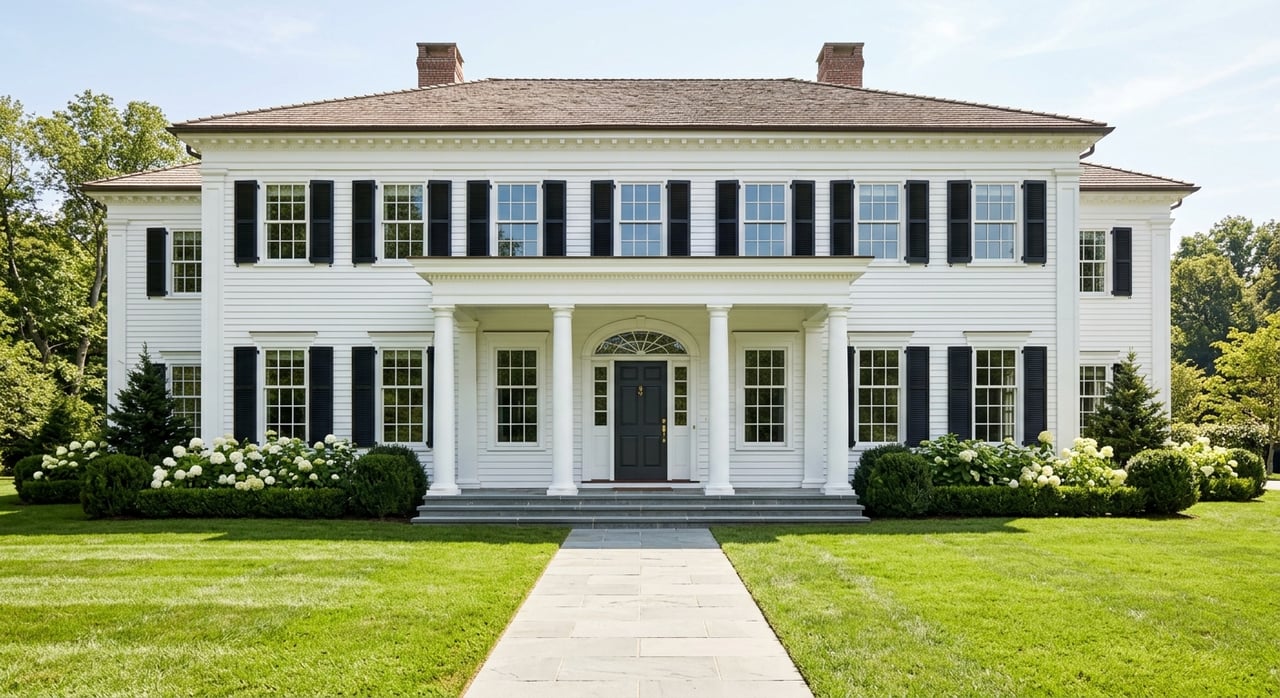
Darien’s housing stock is one of the clearest indicators of the town’s personality. Planning documents state that the town is predominantly developed as single-family residences and neighborhoods, and that single-family detached homes on separate lots make up about 90% of the housing stock.
That pattern creates a residential environment that feels consistent across much of town. If your goal is a classic suburban setting with more privacy, more yard space, and a lower-density streetscape, Darien aligns well with that preference.
At the same time, the town is not limited to one type of housing. Darien’s official and planning documents note higher-density development near the train stations in downtown Darien and Noroton Heights, along with apartments, townhouses, and condominiums in those areas.
Downtown Darien and Noroton Heights
For buyers who want walkability or easier station access, Darien’s two village centers deserve close attention. The strongest local framework is that the town has two recognizable centers, downtown Darien and Noroton Heights, while the surrounding areas remain largely low-density and single-family in character.
That distinction can be useful when you begin narrowing your search. If you want a more traditional neighborhood feel, many parts of town deliver that. If you want a location closer to shops, services, or the train, downtown Darien and Noroton Heights may offer a better fit.
Town documents also show that mixed-use redevelopment is underway in both downtown Darien and the Noroton Heights commercial area. According to the official town statement, that includes retail, commercial space, and apartments, which may continue to shape the feel and housing choices near those centers.
What the Market Suggests
Darien is a high-cost market, and buyers should go in with realistic expectations. Current Census data show an owner-occupied housing unit rate of 82.4%, a median owner-occupied home value of $1,822,400, and median gross rent above $3,500.
Town documents add useful context to those numbers. The official statement says that new replacement single-family homes generally exceed $1 million, while waterfront properties remain among the town’s highest-valued homes.
For NYC buyers, that usually means Darien is best approached as a market where preparation matters. Financing strategy, timing, location priorities, and clarity around must-haves can all make a meaningful difference when inventory and price points are tight.
What to Know About Schools
If schools are part of your move, it helps to start with the basic structure. Darien Public Schools lists seven schools: Darien High School, Middlesex Middle School, and five elementary schools, Hindley, Holmes, Ox Ridge, Royle, and Tokeneke, along with the ELP and IDEA programs.
For relocating buyers, the practical takeaway is less about labels and more about planning. You will want to understand school assignment, transportation, and how your home search timeline lines up with enrollment needs.
A local advisor can help you coordinate the real estate side of that process while you confirm current details directly with the district. That kind of planning is especially helpful if you are trying to balance commute needs, home style, and day-to-day logistics.
Is Darien Right for You?
Darien tends to attract buyers who want a polished coastal suburb with real commuter function and a strong residential identity. The shoreline, parks, train access, and established housing pattern all support a lifestyle that feels quieter than the city without feeling disconnected from it.
It may be especially appealing if you are looking for one or more of the following:
- A coastal Fairfield County setting on Long Island Sound
- Access to two commuter rail stations
- Predominantly single-family neighborhoods
- Village-center options near transit
- Beaches, parks, and year-round outdoor access
- A community-oriented environment with established local resources
The key is knowing which version of Darien fits you best. Some buyers want station proximity and easier daily access to New York. Others want a larger lot, a more tucked-away setting, or a property closer to the water. The right strategy starts with your priorities.
If you are considering a move to Darien or comparing it with nearby Fairfield County towns, Janis Hennessy can help you evaluate the market with a calm, highly tailored approach. Whether you are buying, selling, or exploring a relocation timeline, a bespoke consultation can help you focus on the right areas, property types, and next steps.
FAQs
What is Darien, CT like for NYC buyers?
- Darien offers a coastal Fairfield County setting, two commuter rail stations, predominantly single-family neighborhoods, and access to beaches, parks, and local community resources.
How do you commute from Darien to New York City?
- Darien has two New Haven Line stations, Darien and Noroton Heights, and the town says both stations offer annual permit parking and daily parking.
What kinds of homes are common in Darien?
- Town planning documents say about 90% of Darien’s housing stock is made up of single-family detached homes on separate lots, with higher-density housing closer to downtown and Noroton Heights.
Are there beaches and parks in Darien?
- Yes. The town maintains about 30 acres of shoreline beaches and 203 acres of ballfields and parkland across 11 parks, including Pear Tree Point Beach and Weed Beach.
Does Darien have different village centers?
- Yes. Darien is commonly understood through two main centers, downtown Darien and Noroton Heights, with surrounding areas remaining more low-density and residential.
What should buyers know about Darien home prices?
- Darien is a high-cost, mostly owner-occupied market, with Census data showing a median owner-occupied home value of $1,822,400 and median gross rent above $3,500.
