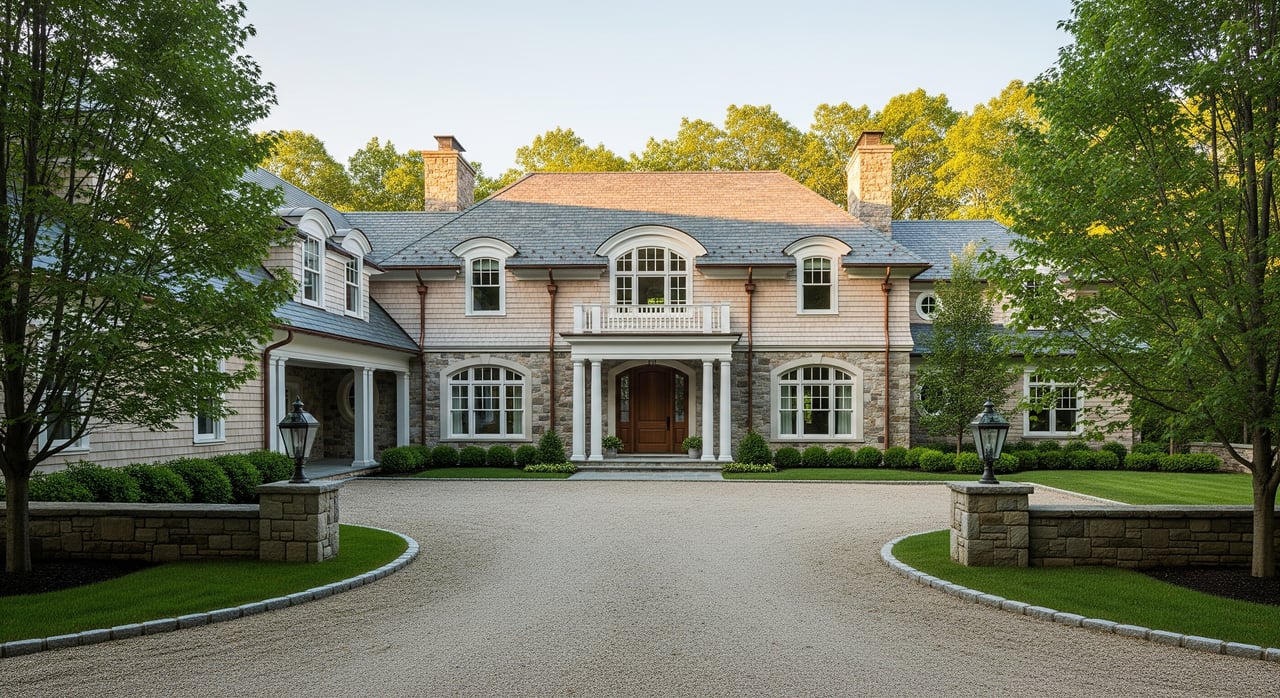
Thinking about a seven-figure home in Wilton and wondering how to finance it with confidence? You are not alone. Many buyers find the line between conforming and jumbo loans confusing, especially when county limits and down payment choices shift the math. In this guide, you will learn how jumbo loans work in Fairfield County, what lenders expect, how rates typically compare, and how to prepare a winning offer in a competitive market. Let’s dive in.
Jumbo vs. conforming basics
A conforming loan is a conventional mortgage that meets Fannie Mae and Freddie Mac size and underwriting rules. These loans are easy to sell in the secondary market, which often leads to strong pricing and broad availability.
A jumbo loan is any mortgage amount above the county’s conforming loan limit. Jumbo loans are not purchased by Fannie or Freddie, so banks and investors set their own guidelines. That is why underwriting, documentation, and pricing can differ from conforming loans.
For 2024, the national baseline conforming limit for a single-family home is $766,550. Many higher-cost counties allow up to 150% of that baseline, or $1,149,825. The actual limit that applies to your purchase depends on the county where the property is located. For Wilton buyers, that means confirming Fairfield County’s current single-family limit before you choose a loan strategy.
How limits affect Wilton buyers
In Wilton, price points often sit near the thresholds where a loan can go either way based on the limit and your down payment. That is why planning early is critical.
Scenario examples
Scenario A: $1,000,000 purchase
- 20% down ($200,000) leads to an $800,000 loan.
- If the county limit is $1,149,825, this loan size can be conforming.
- If the county limit is $766,550, this loan size is jumbo.
Scenario B: $1,500,000 purchase
- 20% down leads to a $1,200,000 loan.
- This likely exceeds even a high-cost limit and would be jumbo.
Scenario C: $850,000 purchase
- 10% down ($85,000) leads to a $765,000 loan.
- This is typically conforming if the baseline limit of $766,550 applies.
Key takeaway: In Wilton, homes between roughly $700,000 and $1.2 million sit in a gray zone where your down payment and the county’s yearly limit can determine whether your loan is conforming or jumbo. For many purchases above about $1.15 million in loan amount, plan on jumbo financing.
Typical jumbo requirements
Jumbo loans can require stronger profiles and more documentation. Program details vary by lender, but several themes are common.
Down payment and LTV
- Many jumbo programs price best with at least 20% down.
- Some lenders offer jumbos with 10–15% down for highly qualified buyers. Expect stricter requirements on credit, debt-to-income ratio, and reserves at lower down payments.
Credit, DTI, and reserves
- Credit score: Mid-700s or higher often receive the best pricing. Some lenders will consider lower scores with pricing or terms that reflect added risk.
- Debt-to-income (DTI): Many jumbo programs look for about 43–45% or less. Strong compensating factors can sometimes allow a bit higher.
- Reserves: Plan for 6–12 months of principal, interest, taxes, and insurance after closing. Larger loans or higher LTVs may require more.
Documentation and assets
- Expect full documentation: two years of tax returns, W-2s or business records, and recent pay stubs and bank statements.
- Self-employed buyers may be asked for 12–24 months of business documentation or alternative portfolio programs at higher rates.
- Large deposits must be sourced and documented with letters or statements. Lenders verify your ability to cover both the down payment and required reserves.
Appraisal and timing
- Luxury and unique properties often require a more detailed appraisal. Some lenders may request a second appraisal due to the property’s value or uniqueness.
- Jumbo underwriting is often more manual. Build in time for appraisal scheduling and underwriting reviews. Coordinate with your lender so the rate lock covers the full timeline.
Rates and pricing dynamics
Conforming loans benefit from deep secondary-market demand, which can lead to tighter pricing. Jumbo loans are priced by banks and investors that hold these larger balances, so the spread between jumbo and conforming can shift.
What moves jumbo pricing
- Market conditions: Rate spreads can be negligible in some periods and wider in others based on investor appetite and market volatility.
- Borrower profile: Strong credit, lower DTI, and ample reserves can improve pricing on jumbo loans.
- Local lender competition: In the New York–Connecticut corridor, regional and private banks may compete aggressively for high-quality jumbo borrowers.
Points, products, and fees
- You can use points to reduce the rate, just like with conforming loans.
- Consider the structure that fits your plans. Fixed and adjustable options are common in the jumbo space.
- Understand total cost, not just the rate. Compare points, origination fees, and lock costs across lenders.
How to prepare and compete
Winning a Wilton home often comes down to preparation that inspires confidence. A polished financing plan can make your offer stand out.
Build a stronger pre-approval
- Seek a full, documented pre-approval rather than a simple pre-qualification.
- Aim for a pre-underwritten file. Verified income, assets, and credit make your approval letter more credible with sellers.
- Work with a lender experienced in Fairfield County jumbo loans. Local knowledge helps with appraisals, comps, and underwriting nuances.
Strengthen your offer
- Consider a larger down payment if possible. It can move a borderline loan size from jumbo to conforming, or it can improve jumbo pricing.
- Show strong reserves. Demonstrating several months of payments on hand reduces perceived risk.
- Pair a robust pre-approval with higher earnest money, a focused financing contingency, and flexibility on timing.
Plan for appraisal gaps
- Unique or high-end homes can present appraisal challenges.
- Decide in advance how much of a shortfall you can comfortably cover.
- Ask your lender about appraisal review options if value comes in lower than expected.
Keep backup options
- Maintain relationships with more than one lender. Consider a regional bank that holds loans in portfolio and a mortgage broker with access to multiple programs.
- If timing is tight, discuss bridge financing or temporary portfolio solutions.
- Coordinate rate locks and appraisal ordering early. Choose a lock period that fits the likely timeline.
What to bring your lender
Use this simple checklist to speed up jumbo approval:
- Two years of federal tax returns and W-2s (and K-1s if applicable).
- Recent pay stubs (1–2 months) or business statements (12–24 months for self-employed).
- Three to six months of personal bank statements showing down payment and reserves.
- Retirement and investment account statements if you plan to use assets for reserves.
- Gift letters and transfer documentation for any large deposits.
- A signed offer contract and contact details for your real estate attorney and agent.
The Wilton advantage with a plan
With the right preparation, jumbo financing can be straightforward. The key is to confirm the county’s current conforming limit, match your down payment to your goals, and work with a lender who knows Fairfield County’s luxury market. A strong, verified pre-approval and a clean file often make the difference between a good offer and a winning one.
If you would like a calm, step-by-step plan tailored to your budget and timing, connect with Janis Hennessy. You will receive steady guidance, introductions to trusted local jumbo lenders through respected brokerage channels, and an offer strategy that fits Wilton’s market conditions.
FAQs
What is a jumbo mortgage for a Wilton home?
- A jumbo mortgage is any loan that exceeds the current conforming loan limit for Fairfield County. If your required loan amount is above that limit, you will use jumbo financing.
How do 2024 loan limits impact Wilton buyers?
- The 2024 baseline conforming limit is $766,550 and the typical high-cost cap is $1,149,825. Where your loan lands relative to the county’s limit determines whether it is conforming or jumbo.
What down payment is typical for jumbo loans?
- Many jumbo programs prefer 20% down for best pricing, though some lenders offer 10–15% down options for highly qualified buyers with strong credit and reserves.
What credit score and reserves do lenders want?
- Mid-700s credit often earns stronger pricing. Expect 6–12 months of reserves after closing, with higher amounts possible for larger loans or higher loan-to-value ratios.
How long does jumbo underwriting take?
- Jumbo underwriting is more manual and can take longer than conforming loans. Plan ahead for appraisal scheduling and choose a rate lock that comfortably covers the timeline.
How can I make my jumbo offer more competitive?
- Secure a full, documented pre-approval, consider a larger down payment, show strong reserves, and use focused contingencies. Experienced local lenders and a clear plan can help you win.
