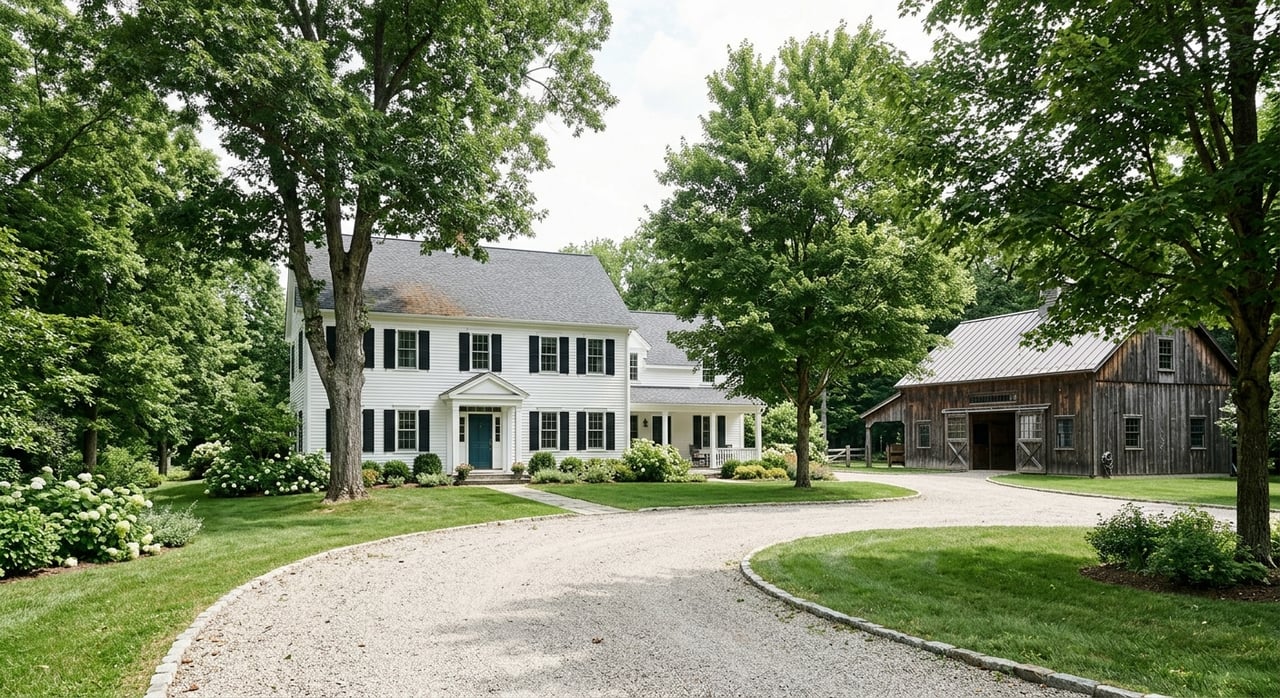
If you’re craving land, quiet, and room to breathe without giving up access to New York, Wilton deserves a close look. This is one of those towns where privacy is not just a feeling. It is shaped by preserved open space, larger residential lots, and a long-standing rural pattern that still defines daily life. If you are wondering what country living in Wilton really looks like, this guide will walk you through acreage, horse property rules, privacy, and the practical details that matter before you buy or sell. Let’s dive in.
Why Wilton Feels Rural
Wilton describes itself as a town that has kept much of its rural atmosphere and privacy. Woods, streams, ponds, rolling hills, and preserved land all contribute to that setting. According to the town, nearly 1,000 acres of open space have been preserved, which helps explain why many properties still feel tucked away and distinct.
That preserved character is not just visual. Wilton’s parks, trails, and land-trust spaces are part of everyday life, and some trail systems include horseback riding. For buyers, that means the country feel extends beyond individual property lines and into the broader landscape.
At the same time, Wilton is not isolated. The town sits on Metro-North’s Danbury Branch, offering service toward Grand Central. That combination of rural setting and rail access is a big part of Wilton’s appeal.
What Acreage Means in Wilton
When people picture country living, they often think about large parcels, deep setbacks, and a sense of separation from neighboring homes. In Wilton, those qualities are supported by residential zoning patterns. The town’s residential districts include R-1A with a 1-acre minimum and R-2A with a 2-acre minimum.
Those districts also have relatively generous setback and coverage rules. In R-1A, the minimum front and rear setbacks are 40 feet, side setbacks are 30 feet, building coverage is capped at 10%, and site coverage is capped at 15%. In R-2A, the minimum front and rear setbacks are 50 feet, side setbacks are 40 feet, building coverage is capped at 7%, and site coverage is capped at 12%.
In practical terms, that helps preserve space around the home and keeps the built footprint relatively restrained compared with lot size. If you are searching for a wooded property, long driveway, lawn space, or a quieter setting, these zoning patterns are part of why Wilton often delivers that experience.
Privacy Is Part of the Appeal
Privacy in Wilton is not only about acreage. It also comes from the town’s physical character and planning choices. Preserved open space, limited land remaining for development, and lower-density residential areas all work together to support the feeling many buyers want when they say they are looking for “country.”
The town also uses overlay districts in center and corridor areas, including Wilton Center and portions of Danbury Road. That suggests more intensive development is being directed toward those locations, while much of the base residential area continues to reflect the larger-lot, wooded character many buyers associate with country living.
For sellers, this matters too. Homes with privacy, mature landscape screening, and meaningful land can stand out because that setting is not easy to replicate. The value is often tied not just to square footage, but to the experience of space and seclusion.
Horse Property in Wilton
If horses are part of your vision, Wilton offers real possibilities, but it is important to understand the rules clearly. In R-1A and R-2A residential districts, horse keeping is allowed as an accessory use at a rate of one horse per one-half acre, with a maximum of three horses.
That means a property may support personal horse keeping, but the exact fit still depends on the parcel and any site-specific constraints. Buyers should think beyond lot size alone and consider layout, drainage, access, and how the land is actually usable.
Wilton also allows riding stables in those same districts, but only with special permit and site plan approval. The zoning regulations require at least 10 acres of suitably drained land, at least one off-street parking space per horse, manure disposal measures, adequate fencing, and 100-foot setbacks from streets and lot lines.
For many buyers, the takeaway is simple: Wilton can support an equestrian lifestyle, but there is a difference between private horse keeping and a more formal riding-stable use. Knowing that difference early can save time and help narrow the right property search.
Riding Beyond Your Property
One of Wilton’s strengths is that equestrian appeal is not limited to private land. The town and the Wilton Land Trust maintain open spaces and trail systems that include horseback riding. That adds another layer to the lifestyle for buyers who want both private acreage and access to riding opportunities in the surrounding town landscape.
This can be especially appealing if you want country living with outdoor access woven into daily life. Instead of relying only on your own parcel, you may also benefit from the town’s broader open-space network.
Country Living Comes With Practical Details
The beauty of a larger parcel often comes with added responsibility. In Wilton, that starts with understanding water, sewer, septic, and site conditions.
The Wilton Water Commission states that the town does not currently own any water systems. The Health Department enforces state rules for septic systems and wells. A town sewer-planning document also shows that existing sewer service is concentrated in southern, higher-density parts of town and Wilton Center, while other areas are intended to continue using private septic systems and larger lots.
For buyers, that means you should not assume a country property will be served by public water or sewer. For sellers, it is a reminder that these systems are part of the property story and often part of buyer due diligence.
Wetlands, Drainage, and Land Use
On a wooded or larger parcel, not every part of the land may be equally usable. Wilton’s Environmental Affairs Department administers inland wetlands and watercourse regulations, facilitates the wetland permit process, and manages open spaces. If future plans involve clearing, grading, drainage work, or other site changes, town review may come into play.
That does not mean a property is less desirable. It simply means land should be evaluated carefully and with realistic expectations. A beautiful acreage property may offer wonderful privacy and outdoor enjoyment, while also requiring thoughtful planning for any changes.
If the property includes horse use, there are also operational requirements to keep in mind. Wilton’s regulations call for manure storage to be screened and maintained so it does not disturb neighboring properties.
A Simple Due Diligence Checklist
If you are considering country living in Wilton, it helps to review a few basics early:
- Confirm the zoning district and minimum lot requirements
- Ask whether the property is served by septic, well, sewer, or another system
- Review wetlands, drainage, and any regulated areas on the site
- Understand whether horse keeping is permitted as planned
- If equestrian use is more intensive, check special permit and site plan requirements
- Consider how much of the land is actually usable for your goals
- Evaluate commuter access if rail service is part of your routine
For larger and more complex properties, these details can influence both value and day-to-day ownership. A calm, informed review process helps you make a stronger decision.
The Commute Tradeoff
One of Wilton’s biggest advantages is that it offers a genuine sense of retreat while still connecting to the region. The Danbury Branch includes Wilton, Cannondale, Branchville, Merritt 7, and South Norwalk on the route toward Grand Central. The Wilton station also has a ramp-accessible platform, a ticket machine, no ticket office, and bus connections through HARTransit and Norwalk Transit.
That said, country living often means balancing privacy with logistics. You may enjoy a longer driveway, more land, and more separation, while also planning around train schedules, septic or well maintenance, and the realities of managing a larger property.
For many buyers, that is a worthwhile exchange. Wilton’s appeal lies in exactly that balance: space, scenery, and privacy with practical access to the city and surrounding Fairfield County towns.
Who Wilton Country Living Suits Best
Wilton can be an excellent fit if you want a property that feels established, private, and connected to nature. Buyers often look here when they want land and a quieter setting without moving to a remote rural area. It can also appeal to those exploring horse-friendly properties within Fairfield County.
For sellers, the same qualities can be powerful differentiators when presented clearly. Acreage, trail access, preserved surroundings, and a true sense of retreat are meaningful features, especially when paired with a realistic understanding of zoning and site conditions.
If you are weighing a purchase or preparing to sell, the best outcomes usually come from understanding both the lifestyle and the practical details. Wilton offers a distinctive version of country living, and with the right guidance, you can evaluate it with clarity and confidence.
If you are considering buying or selling a country property in Wilton, Janis Hennessy offers the steady local guidance and personalized service that complex properties deserve.
FAQs
What does country living in Wilton usually mean for homebuyers?
- In Wilton, country living usually means larger residential lots, preserved open space, wooded surroundings, privacy, and a more rural atmosphere without being disconnected from rail access and nearby town centers.
How much land do you need for horses in Wilton?
- In Wilton’s R-1A and R-2A districts, horse keeping is allowed at one horse per one-half acre, up to a maximum of three horses.
What are the rules for a riding stable in Wilton?
- A riding stable in Wilton requires special permit and site plan approval and must meet rules including at least 10 acres of suitably drained land, parking, fencing, manure disposal measures, and 100-foot setbacks from streets and lot lines.
Are country properties in Wilton on public water and sewer?
- Not always. The town states it does not currently own any water systems, and sewer service is concentrated in southern, higher-density parts of town and Wilton Center, while other areas are intended to continue using private septic systems and larger lots.
Do wetlands matter when buying acreage in Wilton?
- Yes. Wilton’s Environmental Affairs Department administers inland wetlands and watercourse regulations, so wetlands, drainage, clearing, grading, and similar site changes may require review.
Is Wilton still practical for New York commuters?
- Yes. Wilton is on Metro-North’s Danbury Branch, which connects through stations including South Norwalk on the route toward Grand Central, making the town rural in feel but still regionally connected.
