If you love houses, few towns offer a richer tour than New Canaan. From classic clapboard Colonials to glass-walled modern gems, the town reads like a living design museum. If you are weighing a timeless traditional against a bold contemporary, you want to understand what each style signals for lifestyle, maintenance, and value. This guide walks you through the architectural styles that define New Canaan, where you tend to find them, and what to consider as a buyer or seller. Let’s dive in.
Why New Canaan architecture stands out
New Canaan’s built story stretches from 18th‑century settlement to today’s custom estates. The town is nationally known for its mid‑century modern legacy, shaped by the “Harvard Five” architects, including Philip Johnson and Marcel Breuer. You can trace that legacy in the town’s surveys and at the enduring landmark of the Glass House. At the same time, in‑town streets and older corridors still feature period Colonials, Tudors, Shingle Style homes and early 20th‑century estate properties.
If you map styles to neighborhoods, patterns appear. The compact village center and nearby streets lean traditional and walkable. The Ridges corridors, like Ponus Ridge, Oenoke Ridge and Smith Ridge, host large lots, mid‑century modern clusters, and newer custom builds. Silvermine and some cul‑de‑sacs such as Devonwood blend earlier farmhouses with modern farmhouse new construction.
Style guide to New Canaan homes
Colonial and Colonial Revival
You know a Colonial when you see balanced windows, a centered entry, clapboard or shingle siding, and classical trim. Interiors often keep defined rooms and a more formal plan than today’s open concepts. Early examples date to the 1700s, like the Hanford‑Silliman House, while Colonial Revival versions from the early 1900s line established streets near the village center.
If you buy or sell a Colonial, expect conversations about kitchens, baths, and systems. Sensitive additions that keep the front facade intact but open up the rear are common and market friendly. Local historic plaque programs and documentation from the historical society can add confidence for buyers and support value.
Farmhouse and modern farmhouse
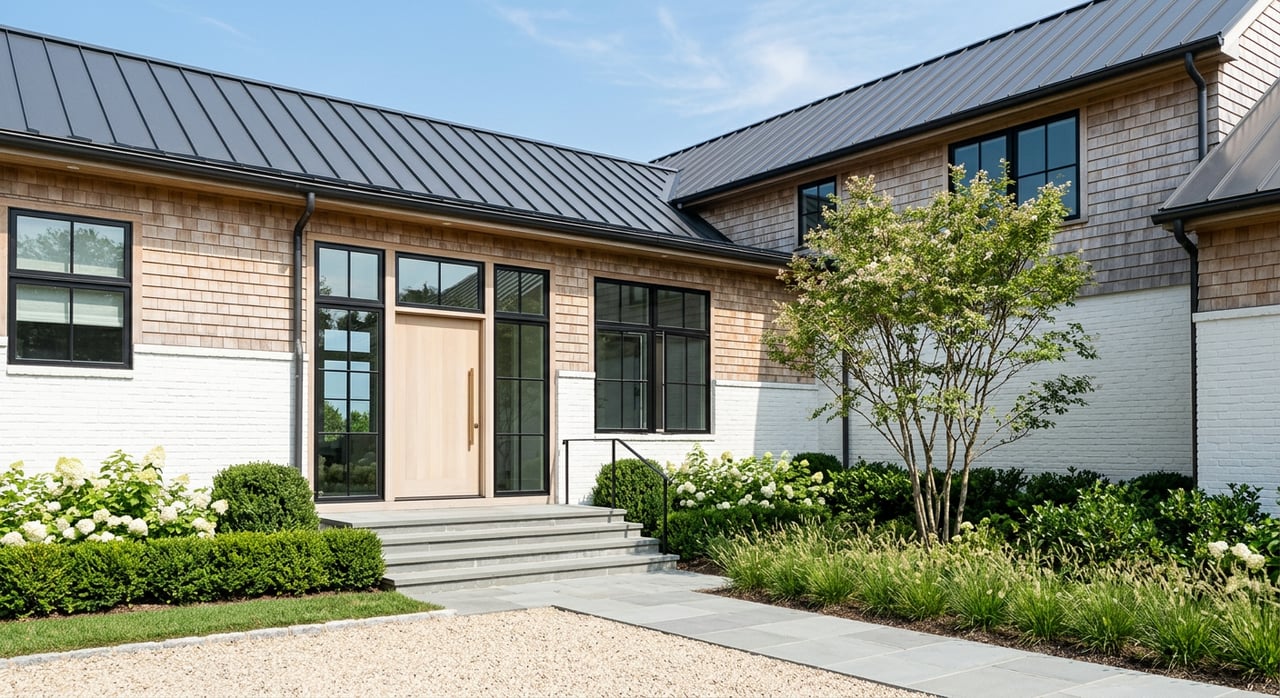
Classic farmhouses show gabled roofs, porches, and simple lines, often with board‑and‑batten or shingle siding. In New Canaan, you will find originals in semi‑rural pockets like Silvermine, along with recent modern farmhouse builds that scale up the look with large windows, open plans, and luxe finishes. Silvermine and newer cul‑de‑sacs such as Devonwood often feature this aesthetic.
For buyers, modern farmhouses live easily: open kitchens, big mudrooms, and indoor‑outdoor flow are everyday wins. For sellers, presentation matters. Staging that leans warm and simple shows off the light and volume that buyers want.
Mid‑century modern originals
New Canaan’s mid‑century modern homes are a signature draw. Hallmarks include horizontal lines, open plans, extensive glass, and seamless connection to the landscape. The town’s modern surveys highlight dozens of architect‑designed houses, and the “Harvard Five” era remains a cornerstone of local identity. For context, explore the architects’ story on the Harvard Five overview and the New Canaan Museum’s Modern New Canaan resources.
For your due diligence, focus early on glazing, roof and waterproofing details, structure, and mechanical systems. Many mid‑century homes use unique materials and assemblies. A resource like the Iconic Houses toolkit can help you frame the inspection. Preservation is active in town, and tours such as the Modern House Day program offer real‑world examples of this architecture.
Contemporary and estate‑scale
Custom contemporary and estate‑scale houses lean into stone, stucco, steel, and glass, with gallery‑like interiors and high‑end systems. You often find them on larger lots along Ponus Ridge, Oenoke Ridge, Smith Ridge, and in enclaves like Devonwood. Older estate anchors, including Waveny, set the tone for scale and grounds.
At this level, value follows land, privacy, and amenities such as pools, tennis, and guest houses. Local reporting shows how large estate parcels can see subdivision or consolidation to meet buyer demand and planning rules, highlighting ongoing land‑use pressures. For a sense of scale and coverage, see this CT Insider piece on high‑end activity.
Tudor, Georgian, and Shingle Style
Revival styles from the early 1900s add character throughout New Canaan. Tudors show steep roofs and half‑timbered accents. Shingle Style homes favor sweeping gambrel forms and extensive shingle cladding. Georgian and Colonial Revival examples present formal symmetry, brickwork, and classical trim. These houses often cluster along wealthier historic corridors and estate‑era streets.
Buyers tend to respond to thoughtful restorations that keep original detailing but modernize systems and baths. A carefully updated 1930s Tudor is a good example of how craft and authenticity support top‑tier pricing, as seen in local coverage of notable restorations.
Style and price in today’s market
New Canaan sits at the upper tier of Fairfield County. As a townwide reference point, the PropertyShark market snapshot placed the Q3 2025 median sale price near 2.1 million. Other recent reports have shown medians around 2.0 million for sold data and roughly 3.0 million for list prices, reflecting differences in methodology and timing.
Price bands then vary by style and location:
- In‑town Colonials and updated capes often anchor the lower range of single‑family pricing for New Canaan, though size and finish still command seven‑figure numbers.
- Modern farmhouses and new custom builds in Silvermine, Devonwood, and on larger lots commonly trade in the mid‑to‑upper millions, with premium finishes pushing higher.
- Architect‑designed mid‑century homes can sell at a per‑square‑foot premium when design is intact and systems are strong. Altered or deferred‑maintenance examples may price for renovation or replacement.
- Estate properties and large contemporaries on the Ridges typically sit at the top of the market. Lot size, privacy, and amenities drive outcomes.
Use these townwide figures as context, then rely on street‑level comps and the specific architecture to set strategy.
Buyer checklists by style
A clear plan helps you move fast and smart. Tailor your due diligence to the house you love.
Mid‑century modern checks
- Review structure, large‑format glazing, roof details, and waterproofing.
- Confirm HVAC upgrades and insulation history for comfort and efficiency.
- Consider inspectors and contractors who know modern materials. A resource like the Iconic Houses toolkit can guide your questions.
Colonial, Tudor, and other historic checks
- Verify chimneys, roofing, and framing. Ask about any lead, asbestos, or older systems that may remain.
- If the home has or may seek historic recognition, understand whether exterior changes could require review. The New Canaan Museum’s Modern New Canaan page also links to documentation practices that help with provenance.
New builds and modern farmhouse checks
- Confirm builder warranties, mechanical systems, and energy features.
- Understand lot conditions, including potential septic vs municipal sewer, and any site constraints that affect additions or pools.
Incentives and financing considerations
- If you plan to rehabilitate an owner‑occupied historic home, the Connecticut Historic Homes Rehabilitation Tax Credit can offset up to 30 percent of qualified costs, subject to program rules and caps. Review details with the state program page at the CT DECD.
- The federal historic rehabilitation credit typically applies to income‑producing historic properties, not to owner‑occupied homes. Confirm current rules with your tax advisor.
Seller tips that respect style
Style is a story, and stories sell. For distinctive architecture, provenance is a value lever. If your home is architect‑designed or documented in local surveys, make that history part of the narrative. The New Canaan Museum’s Modern New Canaan resources show how provenance and preservation resonate with buyers.
Focus pre‑sale investments where buyers feel them most. Updated kitchens and primary baths, tuned mechanicals, and a clean envelope deliver confidence. Staging should match style: light and uncluttered for moderns, warm and classic for historic homes. National surveys highlight the draw of energy efficiency and clear floor plan flow for today’s buyers, as noted in this NAR trends overview.
Where to start your search
- For modern design: Explore clusters near Ponus Ridge and routes associated with the Harvard Five. The Glass House offers a public lens into New Canaan’s modern heritage, and the museum’s Modern House Day tour is an inspiring primer.
- For new custom and modern farmhouse homes: Silvermine, Devonwood, and larger‑lot corridors often show recent construction with today’s floor plans.
- For classic in‑town charm: Streets near the village center and Oenoke Ridge feature Colonials and period revivals with walkable access to shops and train.
If you want a curated shortlist, a local advisor who knows both architecture and micro‑markets can save you weeks of work and help you assess long‑term value.
Ready to match your style to the right street, price band, and plan? Connect with Janis Hennessy to Request a Bespoke Market Consultation.
FAQs
What are the main home styles in New Canaan?
- You will most often see Colonial and Colonial Revival, farmhouses and modern farmhouses, mid‑century modern originals, contemporary estate homes, and Tudor, Georgian, and Shingle Style revivals.
Where are mid‑century modern homes clustered in New Canaan?
- Many moderns appear near Ponus Ridge and in areas documented by the New Canaan Museum’s surveys, with design heritage tied to the Harvard Five and landmarks like the Glass House.
How do architectural styles affect price in New Canaan?
- Style interacts with lot size, condition, and location: modern farmhouses and new custom homes often trade in the mid‑to‑upper millions, architect‑designed moderns can command premiums when intact, and large estates on the Ridges sit at the top of the market.
What should buyers inspect first on a mid‑century modern home?
- Prioritize glazing, roof and waterproofing details, structure, and HVAC or insulation upgrades, ideally with inspectors experienced in modern materials.
Are there tax credits for restoring a historic New Canaan home?
- The Connecticut Historic Homes Rehabilitation Tax Credit can offset qualified costs for owner‑occupied projects, while the federal historic credit generally applies to income‑producing properties; review eligibility and get pre‑approval where required.
